The machine maker that stopped selling spare parts by phone
An after-sales platform where the customer finds the part on a 3D model of their own machine and orders it without calling service.
- 2
- Applications in the platform
- Yes
- Portal branded per manufacturer
A machine manufacturer earns twice. Once on the machine, then for fifteen years on parts, servicing and repairs. The second stream is often larger than the first, and it is usually handled by phone and email.
What it looked like before
A customer calls to say “something snapped in the feeder”. The service desk works out which model, which year, which feeder revision. Then it hunts for the part number in documentation, emails it over, the customer confirms, someone raises the order by hand. With one machine that is trivial. With a thousand machines across hundreds of customers it is a full-time job for several people, and some of those calls end with the wrong part ordered.
Transaction-Network, a German startup, set out to solve this for many manufacturers at once. Off-the-shelf software failed on two counts. It did not scale to the growth the company had planned, and every manufacturer’s portal looked so alike that the end customer never felt they were dealing with their own supplier.
What we built
A platform made of two applications: one for the manufacturer, one for their customers.
Machines, parts and services. The manufacturer keeps the machine catalogue, the component list and the service scope in one place. That is the source of truth the second application reads.
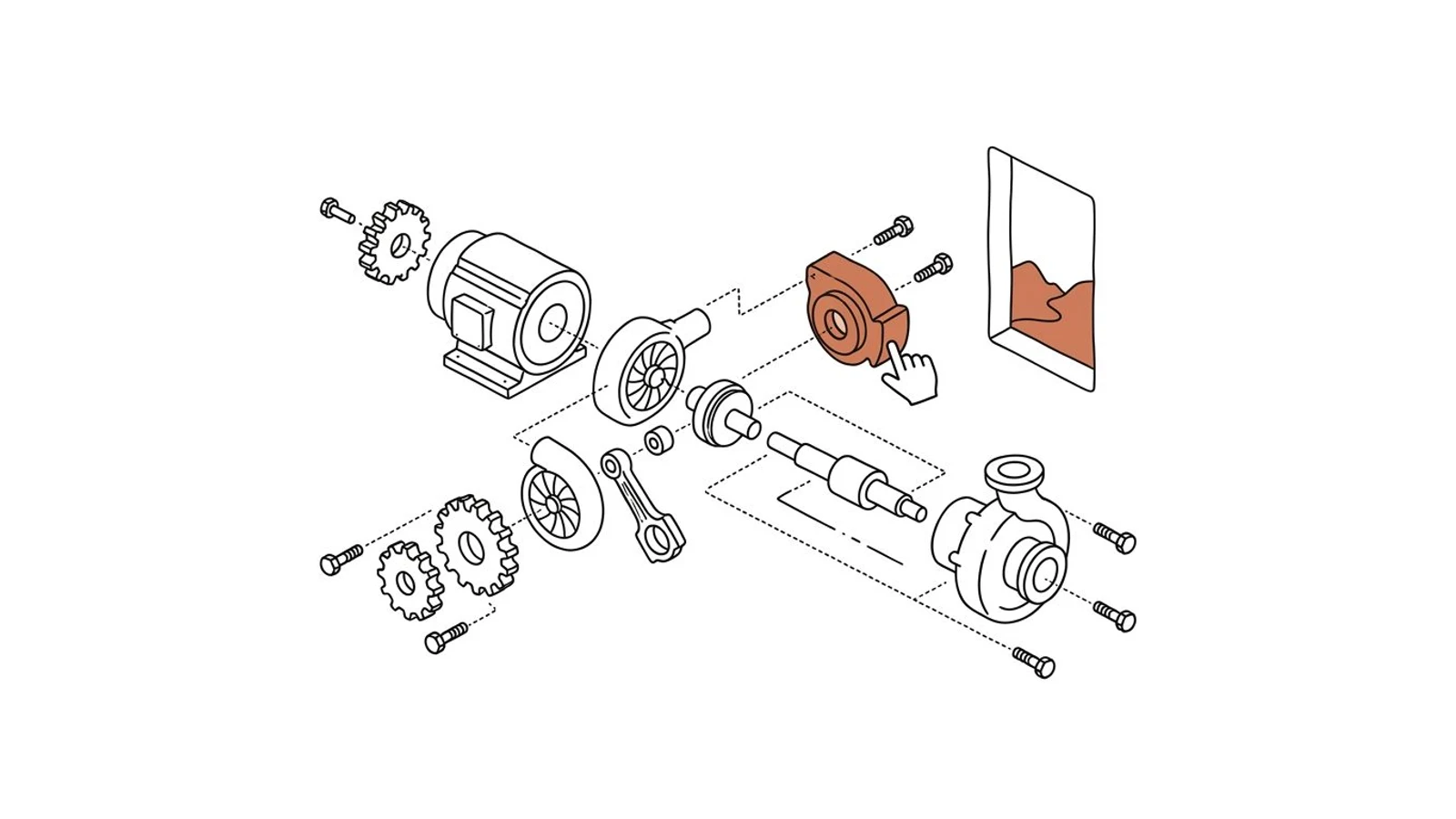
Bill of materials with a 3D model. The customer opens a model of their machine, clicks the part that broke and gets the part number along with availability. “The thing near the feeder” stops being necessary, because pointing works better than describing.
Ordering and service requests. Parts orders and service tickets start from the same place, with the machine’s history alongside.
A portal under the manufacturer’s brand. Each manufacturer sets their own colours, logo and layout. To their customer it is their supplier’s portal, not someone else’s platform with a logo pasted on.
What changes day to day
The biggest shift is who does the work on an order. Identifying the part used to be the service desk’s job and took them a quarter of an hour per request. Now the customer does it, at any hour, without waiting on a hotline – because they are looking at a model of their own machine rather than a PDF catalogue.
The second shift is commercial. A share of after-sales orders never happens at all, because the customer cannot face the phone call and buys a generic part from the first search result. A portal where ordering takes a minute wins some of that revenue back.
Why we built it this way
Two applications in one repository, with a shared component library and a catalogue of interface patterns. That sounds technical, but the effect is commercial: a new manufacturer gets their own portal without rebuilding the interface, and a fix lands for everyone at once. That was the foundation of the growth plan, because the platform only pays off once it serves many manufacturers rather than one.
UDB.pl impressed us with the quality of their Angular development. We see deep expertise in that area. They met our expectations on creativity, communication and openness to our ideas.
Show the technology stack
- Angular
- Nx monorepo
- Ngrx
- Storybook
- Chromatic
- NestJS
- CAD Exchanger
- MJML
- Pactflow
- SonarCloud
- Snyk
- AWS S3