Make your systems finally talk to each other
A CRM that doesn't know what the ERP knows, orders retyped by hand, reports glued together in Excel. We connect fragmented systems into one reliable flow of data.
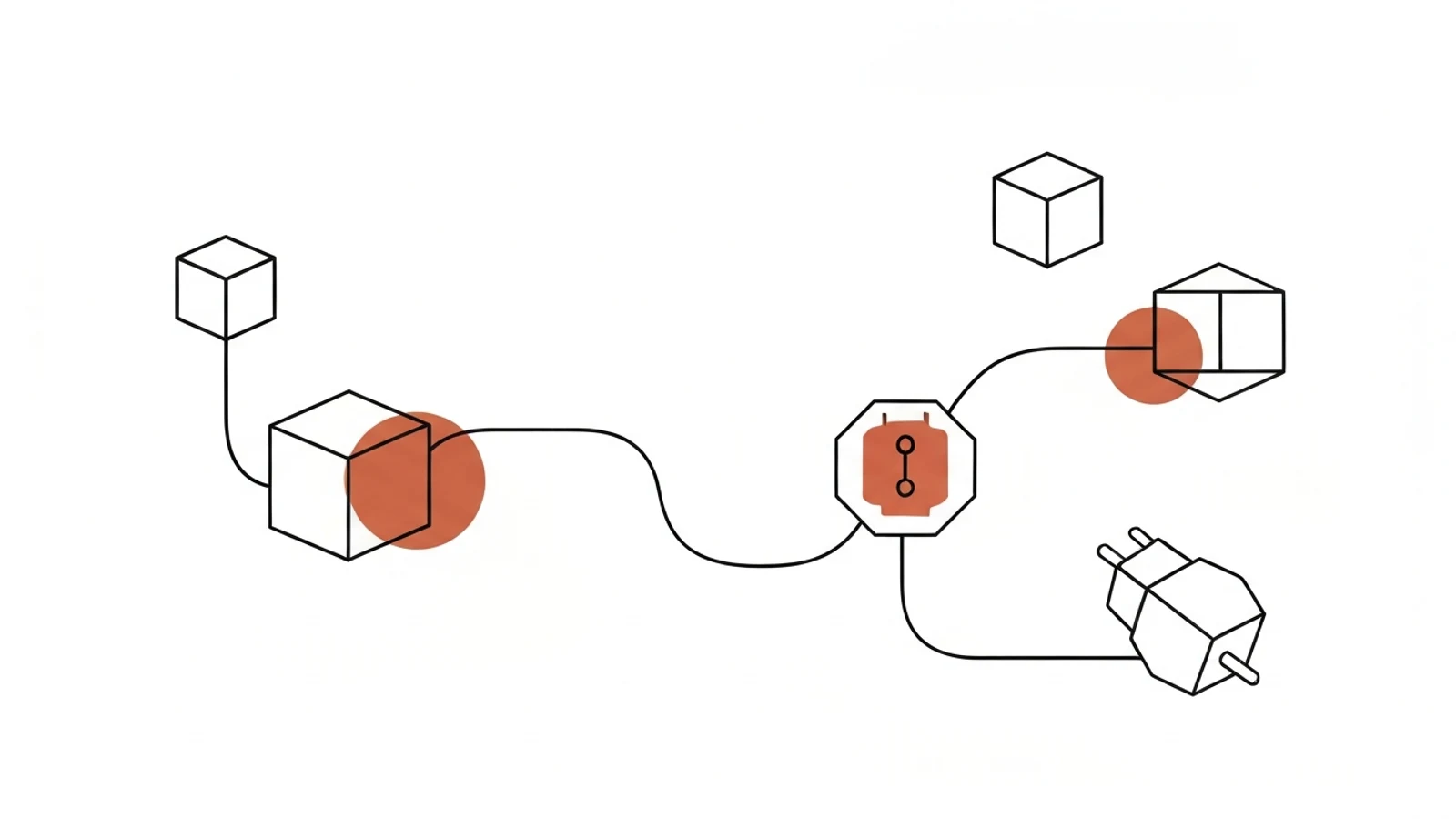
Fragmentation tax
Every disconnected system charges a daily tax: hours of retyping, reconciliation meetings, and decisions made on numbers nobody fully trusts.
Data is retyped by hand
Nobody trusts the numbers
Legacy interfaces block everything
Integrations built like products
Not fire-and-forget scripts – monitored, self-healing connections that your operations can rely on.
Integration audit and architecture
API development and modernization
CRM / ERP / e-commerce connectors
Data pipelines and reporting
Monitoring and self-healing
From landscape map to living integrations
Incremental by design – each connected flow delivers value on its own.
Map the landscape
Design the flows
Connect incrementally
Monitor and maintain
What you get
- Zero manual retyping between systems
- One source of truth for operations
- Hours saved daily in the back office
- New tools that plug in instead of bolting on
“Orders stopped being retyped between four systems. Month-end reconciliation went from days to a report.”
Common questions
Our ERP is ancient. Can you integrate it?
Almost certainly. SOAP, CSV exports, direct database access, file drops: we've built reliable integrations on all of them. Ancient is workable; undocumented just takes a bit longer.
Real-time or batch?
Per flow. Stock levels and orders usually want events or frequent sync, accounting data is often happier in batches. We match the mechanism to the business need, not to fashion.
What happens when a connected system changes its API?
Monitoring catches it immediately, alerts fire, and contract tests show what broke. Failures become visible events instead of silent data drift.
Do we have to replace any of our systems?
No. Integration is the alternative to replacement: the systems you have start acting like one.
Case studies
All case studies →Systems not talking to each other?
List the systems you're running. We'll map what a reliable integration layer would look like – and what it would save.
Map your integrations