A system that makes daily work harder? We modernize it without stopping the business
Slow, expensive to maintain, everyone is afraid to touch it, and it talks to no other tool. We modernize systems like that step by step – the company keeps working the whole time.
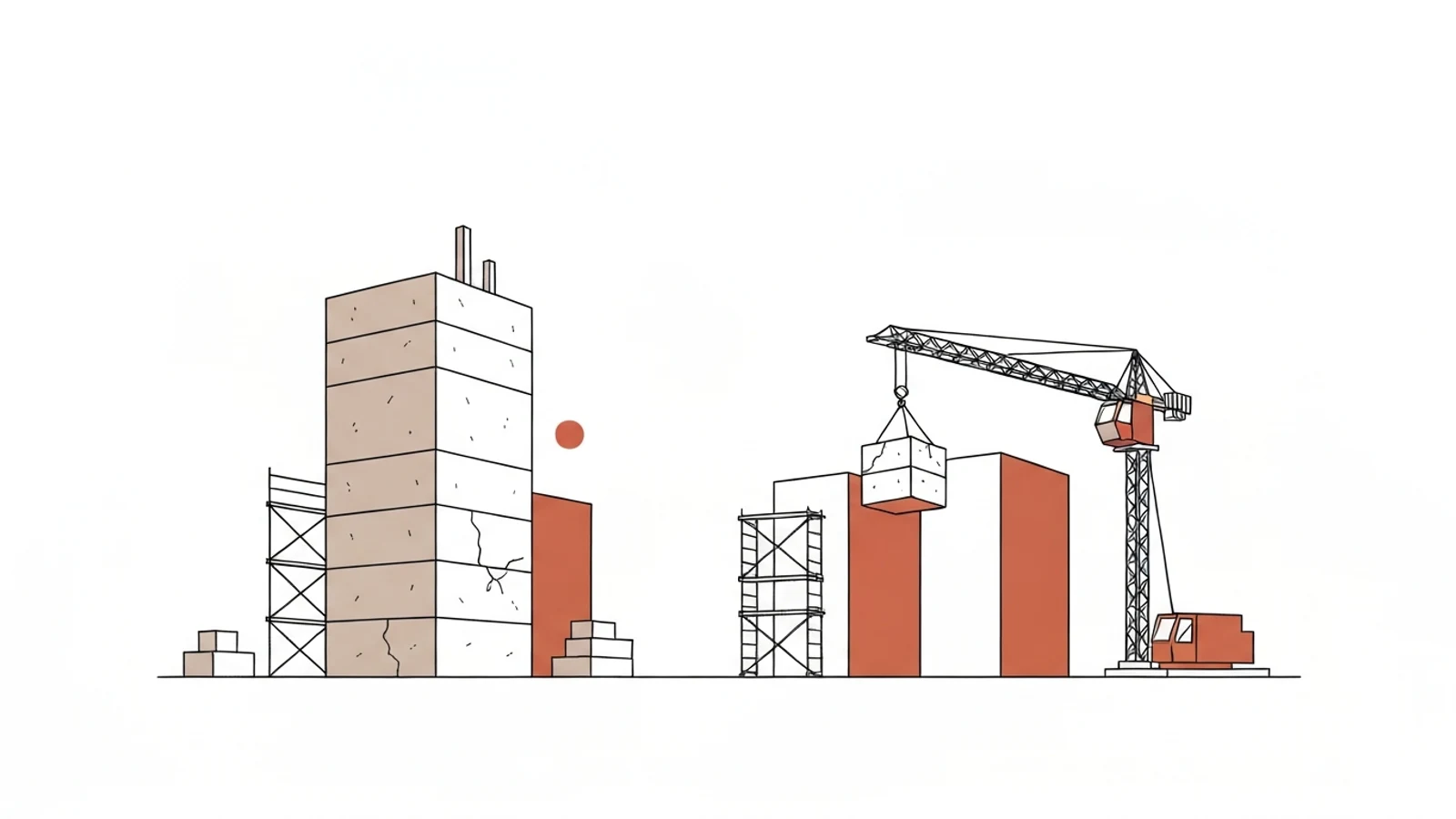
How to tell it’s time
An old system rarely fails loudly. It fails slowly, making everyday work a little harder every year.
Everything takes longer than it should
Everyone is afraid to touch it
Maintenance costs more every year
It connects to nothing
Modernization, as a set of options
Every engagement starts with an audit. Then we pick the path that fits your system, your risk tolerance and your budget – not a one-size-fits-all playbook.
Audit and modernization roadmap
Technology migrations
E-commerce frontend replacement
Strangler-pattern rebuilds
Safety nets before surgery
Documentation and handover
Fleet platform, frontend replacement
A German automotive company worked daily on a fleet platform with a frontend from years ago: every release was risky and the interface put users off. We replaced the frontend module by module – old and new ran side by side, and users saw improvements, not a migration. Releases stopped being events, and the cooperation continues today.
From audit to handover
A proven sequence that keeps risk low and progress visible from week one.
System audit
Fixed-scope phases
Incremental delivery
Clean handover
What you get
- Changes ship in days, not weeks
- Maintenance costs go down
- Zero downtime through the entire migration
- The system keeps up with the business again, not the other way around
“They modernized our order system module by module. Operations didn't lose a single day in eight months.”
Common questions
Will the system be down during migration?
No. Old and new run in parallel, and we switch pieces only when they're proven. Zero-downtime is a design constraint, not a stretch goal.
Our system has no documentation. Is that a problem?
It's the normal case. We start by writing characterization tests that pin down how the system behaves today, and that becomes the safety net for every change.
Rewrite or modernize?
The audit decides, with numbers. A full rewrite is the right call far less often than vendors claim, because it trades a working system for a promise.
How long does it take?
Phases are weeks, not quarters, and the first production change usually lands within a month. The full journey depends on the system, and the roadmap gives you the honest estimate up front.
Case studies
All case studies →Have a system that slows the company down?
Send us a message. Within a few days you'll get an honest assessment of what modernization would take – and whether it's worth it.
Get an assessment