Planning tyre stock when the season starts in two weeks
A tool that calculates how many tyres of each pattern to hold in the coming months, instead of copying last year's sales into a spreadsheet.
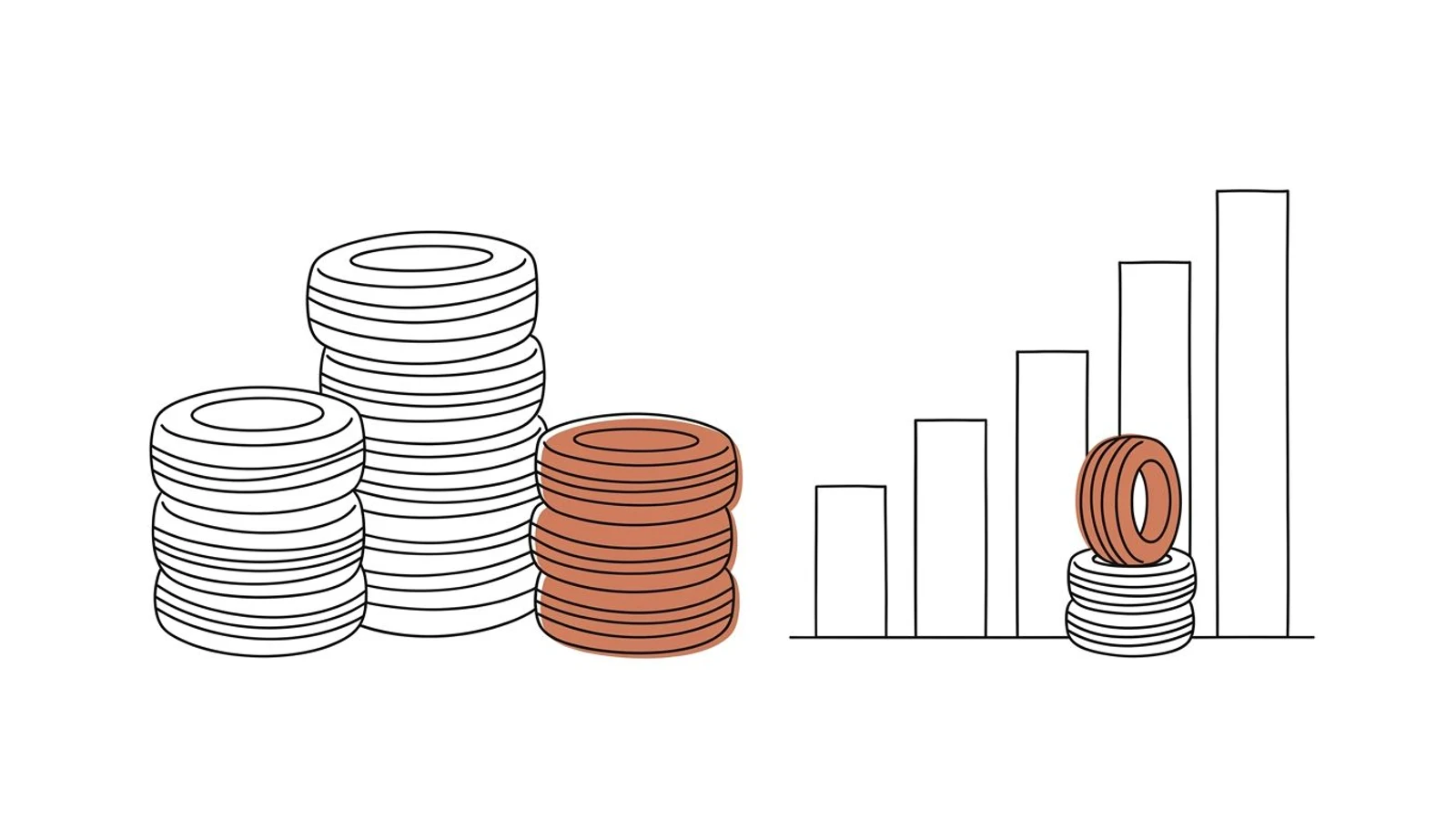
Tyre sales are seasonal and nervous. Nothing happens for most of the year, then the first frost arrives and the entire market wants the same size at once. Run out and the sale goes to a competitor. Overstock and the money sits in a warehouse for another six months.
What it looked like before
The stock plan lived in a spreadsheet. Take last year’s sales, add a view on the weather and the manufacturers’ announcements, and out comes a number of units per pattern and size. With several hundred catalogue items that spreadsheet becomes unreadable, and every correction means recalculating the whole thing.
The problem is not that the spreadsheet miscalculates. It is that nobody dares change it halfway through the season, because it is unclear what else will shift. A plan made in August therefore stands until December, even when September already shows it was wrong.
What we built
A planning tool in which the plan stays alive through the season.
An algorithm that plans forward. Sales history is the starting point, but the plan is calculated for future periods rather than copied from the past. Changing an assumption recalculates immediately.
A catalogue organised by brand and pattern. Hundreds of items grouped the way a salesperson thinks about them, not the way they sit in a database. Plan at brand level and drill down to a single size where it matters.
Plan versions. Baseline, revised, approved. You can see what changed and who changed it, so a mid-season correction stops being a leap of faith.
What changes day to day
The important shift is not obvious: planning stops being an annual event.
When recalculating takes a moment and does not destroy the previous version, it becomes worth revising every month. And a plan revised monthly is simply closer to reality than one made once in August – no magic involved, just the rhythm of work.
The second change concerns negotiations with manufacturers. When an order follows from a calculated plan rather than a hunch, batch sizes and delivery dates are easier to argue for, because the reasoning behind the number is visible.
The client did not share post-rollout figures and we are not inventing any. The mechanism is the same in any business with seasonal stock: less capital frozen in items that do not move, and fewer sales lost at the peak.
Why we built it this way
The company already had working applications and did not want another separate system with its own login and its own look. The interface was built from components that embed into existing screens rather than as a closed island. For the user it is one more tool in the same place, not another tab with another password.
Show the technology stack
- Angular
- Ngrx
- Nx
- Angular Material
- Web Components
- Java 11
- Spring Boot
- Hibernate
- PostgreSQL
- Flyway
- Kubernetes