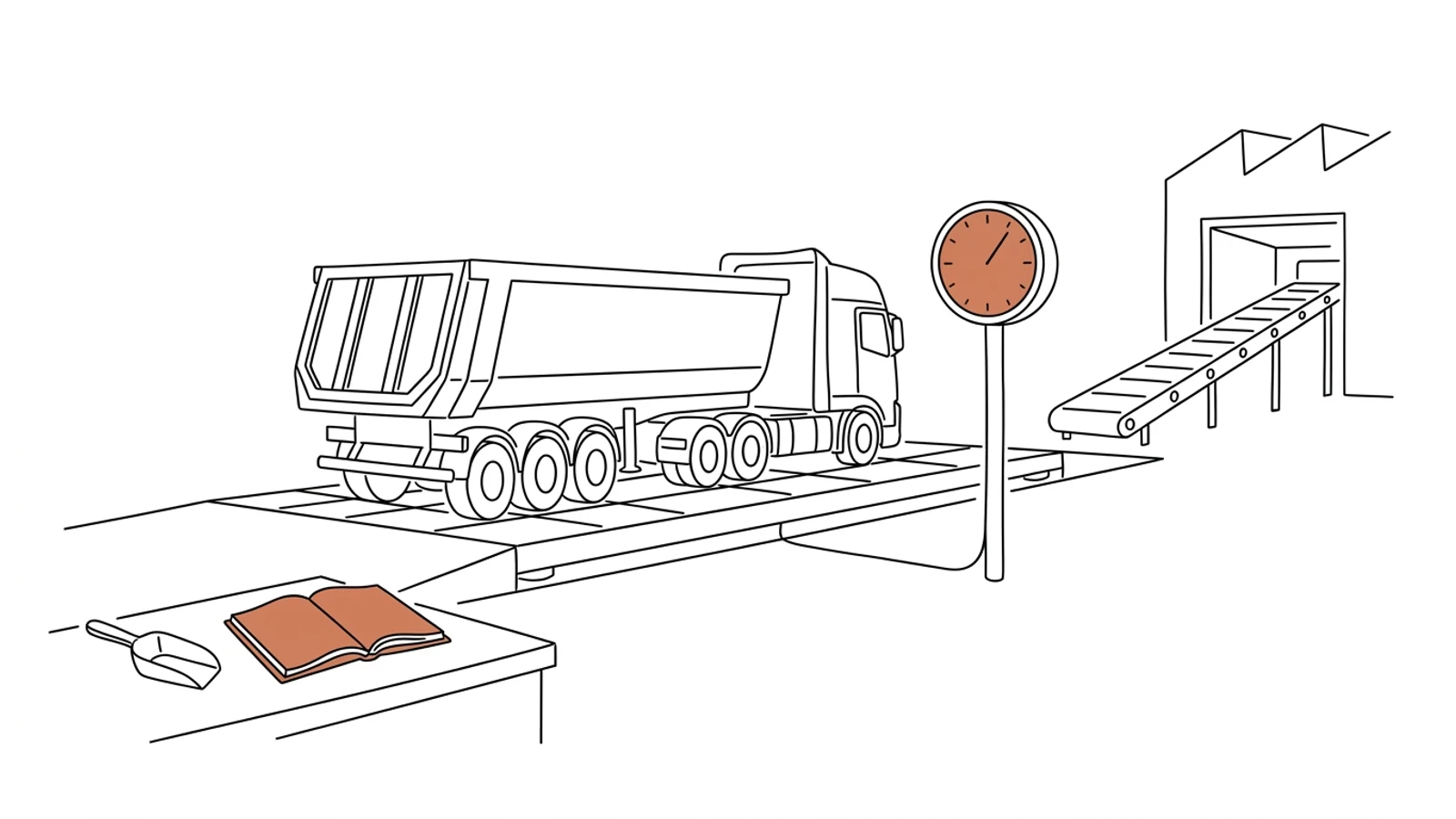
From the weighbridge ticket to the grower's settlement in one flow
Raw material intake, samples, batches, yield, quality control and grower settlements in one system, connected to the ERP and KSeF. In stages, so the line keeps running through the whole campaign.
Raw material weight is in the weighbridge software, finished product in the ERP, waste on the foreman's notepad. Which grower and which batch gave poor yield comes out too late to change anything.
02
Grower settlements mean late nights during the campaign
Weighbridge tickets, deductions for moisture and impurities, advances, flat-rate farmer invoices. The accountant re-keys them into the ERP, and growers call asking when the money comes.
03
The program was written by an IT guy who left
Intake and production run on an application from fifteen years ago that nobody can change. Every new retail chain and every regulation change means a workaround in a spreadsheet.
What you get
Eight parts that make up the system
We do not replace an ERP that handles accounting well. We add the weighbridge, batches, yield, quality and procurement, and connect it all into one flow.
Raw material intake with weight and sample
Gross and tare from the weighbridge, a sample from the lab, grade and deductions. The weighbridge ticket is created from data, and the grower gets it on their phone before leaving.
Batches and production genealogy
A raw material batch enters the line, finished-product batches inherit its number. Merging, splitting and repacking stay in the history.
Yield and losses per batch and shift
Input, output and waste from the line assigned to batch, grower and shift. Poor yield shows after the shift, not after the month.
Quality control on the line
Inspection plans, lab results and HACCP critical control point records on the batch. A batch without a result is not released for sale.
Grower and procurement settlements
Procurement price list with deductions, advances, flat-rate farmer and VAT invoices, offsets for inputs sold to the grower. The settlement is calculated from tickets, and the payment goes out from the ERP.
Raw material and finished goods store
Silos, cold stores, high-bay warehouses with FEFO. Stock per batch and location, release for sale after quality control.
ERP and KSeF integration
Comarch, enova365, SAP Business One or Symfonia stay as accounting and sales. Intakes, production and settlements land there with no re-keying, invoices go to KSeF.
EDI with retail chains
Orders, delivery notifications, dispatch notes and invoices via EDI, GS1 logistics labels on pallets. A new chain is a configuration, not a new program.
AI in the system
What AI does in the plant
Three years ago features like these needed a data science team. Today language models read emails, documents and photos, and we build them into the system we make for you. Below is what makes sense in this solution. A person approves, AI prepares.
Contracts and lab results read
A scan of a supply contract, a result from an external lab or a service invoice becomes data in the system, ready to confirm.
Example a PDF of a supply contract for 300 tonnes → a contract with grower, quantity, base price and deduction table, ready for approval
A yield deviation caught on the shift
The model knows the typical yield for the raw material, grower and line. When a shift falls below it, an alert goes to the production manager with the batches responsible.
Example yield on line 2 lower than in the previous ten shifts → an alert with the raw material batches and growers to check
A campaign plan from the delivery forecast
From contracts, grower declarations and history the model prepares an intake and line-load plan for the weeks of the campaign. The planner corrects and approves.
Example contracts and harvest pace → a weekly intake plan with the days the silos will fill up
Ask production
The owner or the manager asks in plain language, the answer comes from intake, production and settlement data.
Example "which grower had the highest moisture deductions this season?" → a list with tonnage and total deductions
What changes
Effects you see in the first month
Weighbridge ticket, sample and deductions are in the system the moment the truck leaves the scale, because nobody re-keys them
You see yield per batch and shift the next morning, not at month-end
Grower settlements go from tickets to the ERP and KSeF without late nights in accounting
A new retail chain is an EDI configuration, not a change in a program nobody knows
What it connects to
Works with what you already have
The ERP stays the source of accounting and sales. Weighbridges, the lab, line controllers and label printers connect to the system, not the other way round.
We go live before the campaign and freeze changes during it. The old program runs alongside until the end of the first campaign in the new system.
01
Analysis and plant map
We walk the plant from the weighbridge to dispatch. We write down which programs run which stage, where a person re-keys data and what has to work during the campaign without exception.
2–3 weeks
02
Intake and grower settlements
Weighbridge, samples, tickets and grower settlements in the new system, connected to the ERP. Live before the campaign, the old program in read-only mode alongside.
8–12 weeks
03
Production, yield and quality
Batches on the line, yield per shift, quality control and release for sale. More lines once the first is verified.
4–6 weeks
04
EDI, warehouse and development
Retail chains, finished goods warehouse, new reports. You set the order, we ship every two weeks, with a change freeze for the campaign.
ongoing
Does your company run on Excel, emails and a system from years ago? We will build the solution that puts it in order, with AI inside from the start.
You have the diagnosis, we build the solution. Web applications, B2B portals and automations for companies without a large IT department. Today a system can read emails and documents, suggest decisions and answer customers on its own, so we build that in from the first version, not as an add-on a year later.
We agree scope, price and dates upfront, show progress every week, and the code and data stay yours.
No. Stages go live one after another, and the old program runs alongside until the end of the first campaign in the new one. We freeze system changes for the campaign.
Do we replace the ERP or keep it?
Usually you keep it. Comarch, enova365, SAP Business One and Symfonia handle accounting and sales well, and we add intake, production and procurement alongside. If the analysis shows the ERP is the problem, we will say so plainly.
What about the data in the old program?
Growers, contracts, price lists and open settlements carry over in full. Campaign history stays in the old program in read-only mode or moves into the new one if you need year-on-year comparisons.
Does it work with our weighbridge and lab?
We connect weighbridges and weighbridge software through an API, a serial port or a file. Lab results come in from a LIMS, a spreadsheet or a scan. We check this during analysis on your equipment.
Who owns the code and the data?
You do. The code goes into your repository, the data sits in your database on servers in Poland or the EU. You can change vendors at any point.
Let's talk about your plant
You describe how raw material intake and campaign settlements work today, we tell you which stage to start with and how long it takes.