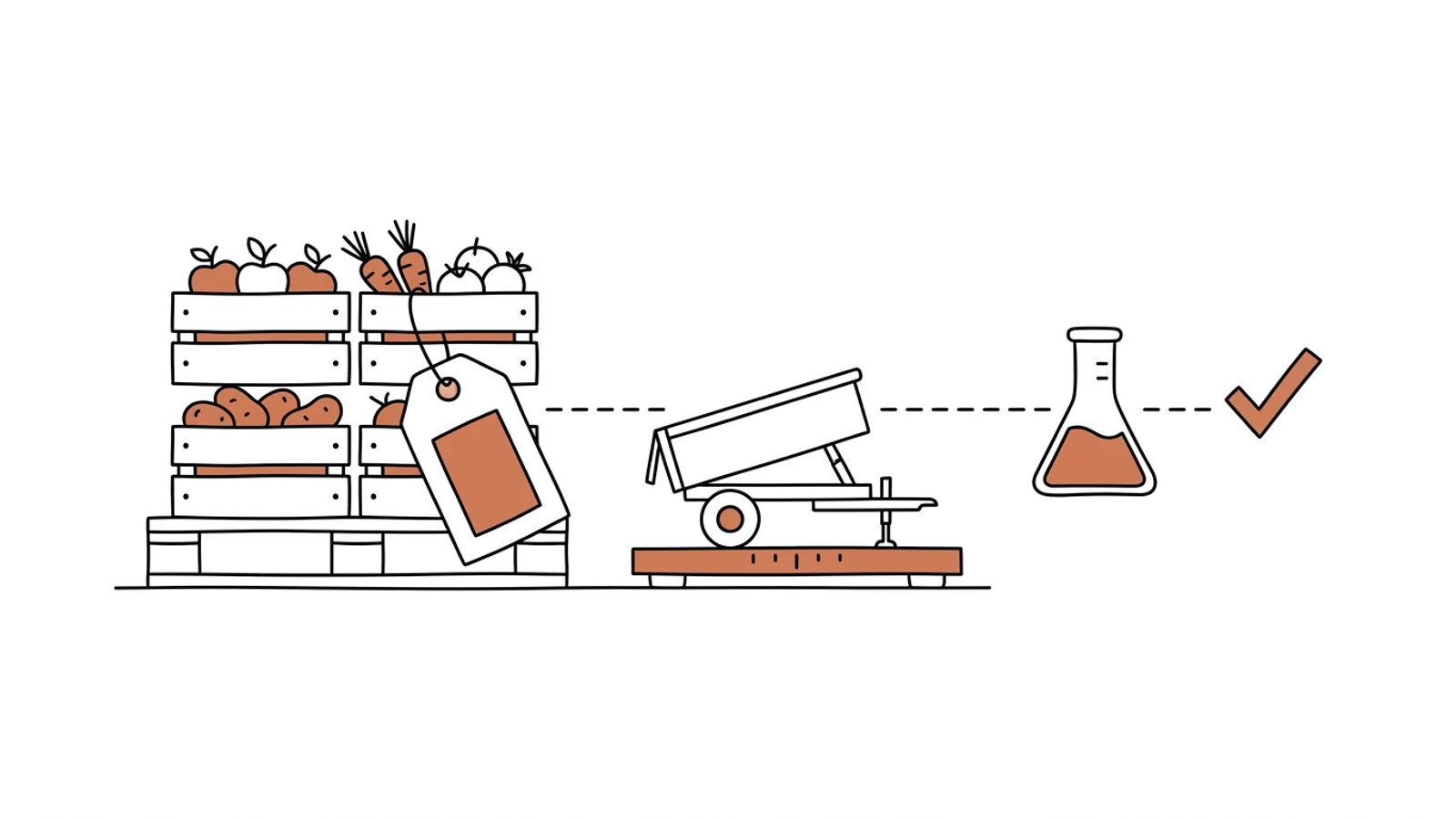
One batch, one number, from the field to the shelf
Grower, carrier, buying station and processor work on the same batch data. A retailer complaint traces back to the specific delivery and field in minutes, not after a week of going through dispatch notes.
The grower has one, the buying station assigns its own, the plant another. Linking them takes three phone calls and a comparison of dispatch notes with weighbridge tickets.
02
A retailer complaint means a week of investigation
The chain reports pesticide residues over the limit in a batch. You search for which field and which grower the goods came from, and in the meantime the chain holds all deliveries.
03
Delivery slots and schedules agreed by phone
At harvest peak growers call in, a queue of tractors and trailers stands at the dock, and the lab does not know what arrives in an hour.
What you get
Eight parts that make up the system
The scope depends on where you sit in the chain: a producer group, a buying station, a plant or all of them at once.
A batch number from the field
The batch is created at harvest, with parcel, variety and date. Every later handover inherits the number, and merging or splitting batches stays in the history.
Delivery notifications and transport documents
The grower notifies a delivery in the portal or the app, the dispatch note and weighbridge ticket are created under one number. The dock knows what arrives and when.
Grower portal
A grower in the group sees their deliveries, sample results, settlements and collection schedule. "Did you receive it?" calls disappear from the buying station's phone.
Samples and quality results on the batch
Moisture, impurities, pesticide residues, quality grade. The lab result comes back to the batch and into the grower's settlement.
Tracing forward and back
From a finished-product batch to the fields the raw material came from. From a field to every buyer it went to. One click in either direction.
Product recall
A list of the batch's buyers with quantities and documents ready in minutes. Notifications to buyers and a report for the food inspection authorities from the system.
Data exchange with retail chains
Orders, delivery notifications, dispatch notes and invoices via EDI with retail chains. GS1-128 logistics labels with batch number and SSCC printed at dispatch.
Chain dashboard
Deliveries on the road, batches in store, results not yet back, open complaints. The buying manager sees the whole picture, not an inbox.
AI in the system
What AI does in the supply chain
Three years ago features like these needed a data science team. Today language models read emails, documents and photos, and we build them into the system we make for you. Below is what makes sense in this solution. A person approves, AI prepares.
Grower documents read
A photo of a weighbridge ticket, a dispatch note or a quality certificate from an external lab becomes batch data for the buying station staff to confirm.
Example a photo of a weighbridge ticket for 24,380 kg net → a receipt with weight, grower and batch number, one click to confirm
A delivery anomaly caught before unloading
An unusual weight, moisture out of line with other deliveries from that field, a delivery with no notification. The alert goes to the manager, the decision is theirs.
Example a third delivery from the same field in one day against a declaration of two → an alert before intake
Ask about a batch in plain language
The quality controller or the sales rep asks, the answer comes from the batch history, not from a binder.
Example "where did the apples from the Kowalski orchard picked on 12 October go?" → three buyers, quantities, dispatch note numbers
A delivery forecast for the week
From grower declarations, history and harvest progress the model prepares a weekly intake plan. The planner corrects what they know better.
Example declarations from 40 growers and harvest pace → a weekly intake plan with peak days
What changes
Effects you see in the first month
A retailer complaint traces back to the field and delivery in minutes, because the batch number does not change along the way
The dock knows what arrives and when, because the grower notifies in the portal, not by phone
The lab result comes back to the batch and the grower's settlement the same day
The recall list of buyers is ready before the inspector calls
What it connects to
Works with what you already have
Weighbridges, ERP and the lab stay. We connect them to one batch history and add the exchange with retail chains that is missing today.
We start with one raw material or one group of growers. The next ones follow once the first flow runs and people trust it.
01
Map of the batch flow
We follow one batch from field to buyer. We write down where it changes number, who re-keys what and which documents get lost.
2 weeks
02
First flow
Batch numbering, delivery notifications and intake with samples for one group of growers or one raw material. Live before the harvest season.
8–10 weeks
03
Portal, EDI and recall
Grower portal, exchange with retail chains, recall report. More raw materials and buyers follow once the first flow is verified.
4–6 weeks
04
Grower onboarding
Portal invitations, a one-page guide, phone support during the first notifications.
2 weeks
Does your company run on Excel, emails and a system from years ago? We will build the solution that puts it in order, with AI inside from the start.
You have the diagnosis, we build the solution. Web applications, B2B portals and automations for companies without a large IT department. Today a system can read emails and documents, suggest decisions and answer customers on its own, so we build that in from the first version, not as an add-on a year later.
We agree scope, price and dates upfront, show progress every week, and the code and data stay yours.
A notification in the app is three fields and a photo. Anyone who does not want the app calls as before, and the buying station staff enter the notification for them.
What about our current weighbridge software and ERP?
They stay. We connect weighbridges through an API or a file from the weighbridge software, the ERP receives intakes and settlements. Nothing is re-keyed a second time.
Is this enough for a GlobalG.A.P. or IFS audit?
Two-way traceability and a recall test are checkpoints in both standards. The system generates both reports from batch data, so the auditor can run a live test.
Who owns the code and the data?
You do. The code goes into your repository, the data sits in your database. You can change vendors at any point.
Where is grower data stored and who sees it?
On servers in Poland or the EU, in your infrastructure or with the cloud provider you choose. A grower sees only their own deliveries and settlements.
Let's talk about your supply chain
You tell us how you number batches today and what happens when a complaint comes in, we tell you which flow to start with and how long it takes.