Architecture

A proposal on the client's desk the day the inquiry arrives

You assemble the scope from ready-made stages, hours and rates come from your studio's price list and closed projects, the PDF goes out for acceptance by link. We start from ArchiFlow and add what your studio does differently.

Does this sound like your studio?

Quoting is a partner's evening

An inquiry for a 180 m² house sits in the inbox for three days, because one person can price it. Hours come from memory, the price from the last similar offer, and the PDF gets assembled in Word after hours.

Three versions of the offer in email

The client asks for a variant without detailed design, then for site supervision included. Every change is a new file, and at contract signing nobody is sure which version was the last one.

Nobody knows whether the stage paid off

The concept was quoted at 60 hours and took 110, but that only surfaced at invoicing. The next proposal is built on the same assumptions anyway.

Seven parts that make up the system

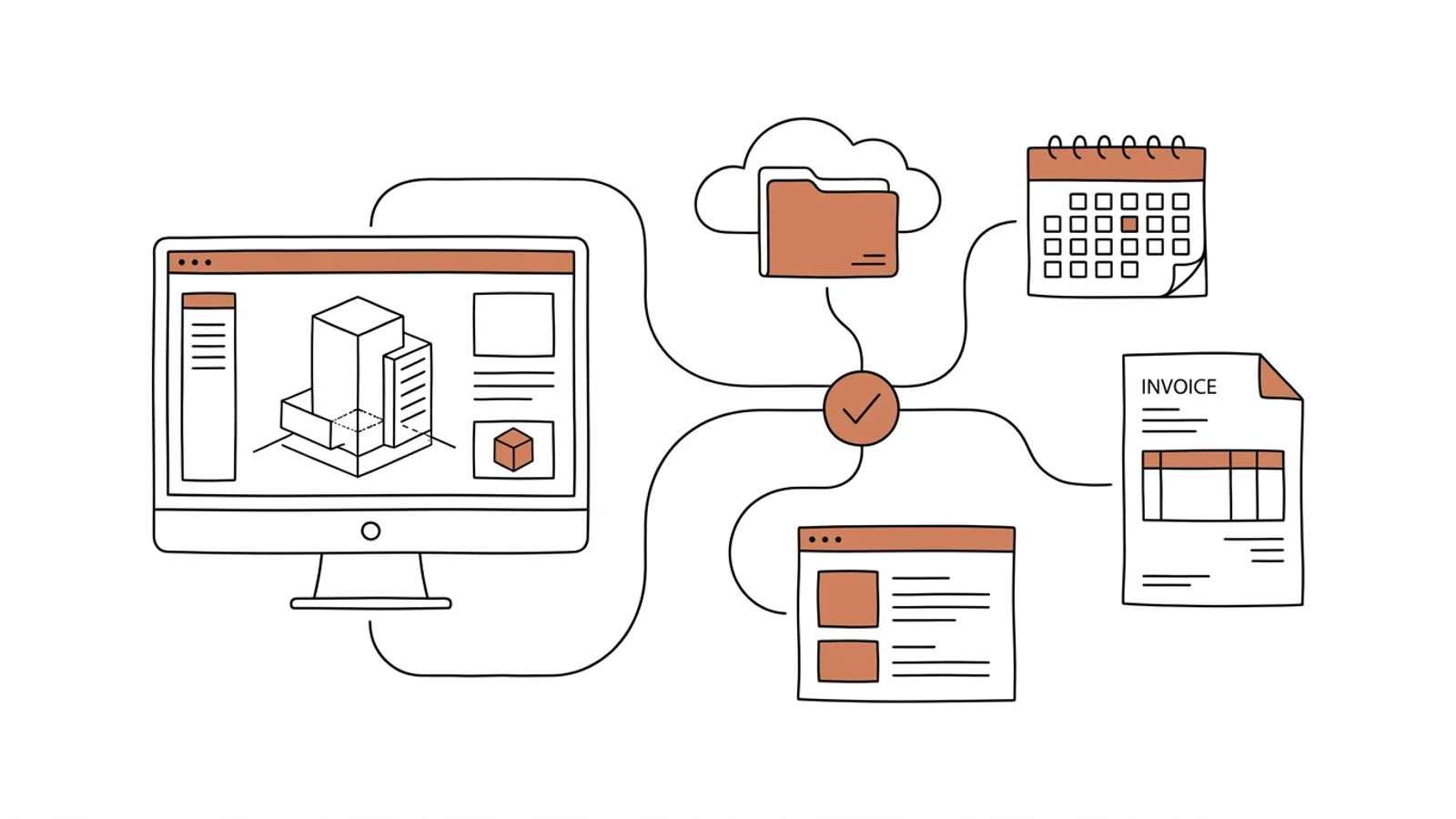
We start from ArchiFlow, which already has stage sets, studio data, a client portal and e-signatures. We add the price list, hour calculation, versions and your studio's proposal layout.

Scope from ready-made stages

Concept, permit design, detailed design, site supervision, plus engineering disciplines and approvals. You pick a set (single-family house, multi-family, adaptation, interiors) and strike out what is not included.

Studio price list and hour calculation

Rates per role, hours per stage and building type, a lump sum or a percentage of construction cost. The amount calculates itself, and you see what it is made of.

Hours from past projects

The system shows how long similar stages really took in closed projects. You quote on your studio's data, with gut feeling kept as a correction.

Proposal PDF in your studio's layout

Scope, stages, deadlines, price and terms in your layout, with your logo and contact details. Ready to send without opening Word.

Versions and variants

A variant without supervision, a variant with interiors, a discount for upfront payment. Every version has a number and a date, and the client sees the one they accepted.

Acceptance by link and electronic signature

The client opens the proposal by link and accepts with a click, then signs the design services contract with a Polish trusted profile (gov.pl). The signed PDF returns to the project folder.

Inquiry pipeline

Which inquiries await a quote, which proposals went out, which have stalled with no reply. A reminder after a week of silence goes out on its own.

What AI does in quoting

Three years ago features like these needed a data science team. Today language models read emails, documents and photos, and we build them into the system we make for you. Below is what makes sense in this solution. A person approves, AI prepares.

An inquiry email broken down into scope

AI reads the client's email and attachments (zoning extract, site map, sketch), pulls out the building type, floor area, plot and expected stages. The architect gets a draft scope to correct.

Example email "single-storey house, about 150 m², plot near Warsaw, permit by spring" → a draft proposal: concept + permit design + detailed design, with a note that zoning information is missing
Hour suggestions from history

The model compares the new inquiry with the studio's closed projects and proposes hours per stage with a range. The partner changes what they know better.

Example commercial building 900 m², permit + detailed design → 320–380 hours, based on four similar projects

A warning when a proposal is off

A price below the cost of the hours, a stage with no price, no clause on scope changes. The warning shows before sending, the decision stays with you.

Example detailed design quoted at 40 hours against an average of 95 in similar projects → a flag on the version before it goes out

Draft replies to the client

For "why is supervision priced separately" or "what does permit design include", the system drafts an answer from the proposal text and the studio's notes. The architect reads, edits and sends.

Example question "is the services design included in the price?" → a draft reply referring to point 3 of the proposal, with a proposed surcharge for engineering disciplines

Effects you see in the first month

  • The proposal goes out the day of the inquiry, because scope, hours and price are assembled from ready parts
  • Any lead architect can quote, because the price list and hour history live in the system rather than in a partner's head
  • At contract signing everyone knows which proposal version applies
  • When a stage closes you see whether the quote matched the real hours, and the next proposal takes that into account
What it connects to

Works with what you already have

ArchiFlow is the base: an accepted proposal creates a project with stages and a folder. The stage invoice is issued by your invoicing software.

ArchiFlowGoogle DriveDropboxtrusted profile (gov.pl)FakturowniawFirmaiFirmaComarch OptimaKSeFGoogle WorkspaceMicrosoft 365GUS/KRS registers

From ArchiFlow to your studio's own quoting

ArchiFlow works from day one. The price list, versions and your PDF layout come in stages, and you keep handling inquiries throughout.

01

ArchiFlow setup and proposal review

We set up the studio, load stage sets and studio data. We sit down over your last ten proposals and write down how you count hours and where the prices come from.
1–2 weeks
02

Price list and calculator

Rates, hours per stage, variants. The first proposals leave the system alongside your current method, and you compare the results.
3–4 weeks
03

PDF, versions and signature

Your proposal layout, version numbering, acceptance by link, contract signed with a trusted profile.
2–3 weeks
04

AI and hour history

Reading inquiry emails, hour suggestions from closed projects, warnings before sending. Further changes follow your queue.
2–3 weeks

Does your company run on Excel, emails and a system from years ago? We will build the solution that puts it in order, with AI inside from the start.

You have the diagnosis, we build the solution. Web applications, B2B portals and automations for companies without a large IT department. Today a system can read emails and documents, suggest decisions and answer customers on its own, so we build that in from the first version, not as an add-on a year later.

We agree scope, price and dates upfront, show progress every week, and the code and data stay yours.

  • scope, price and dates upfront
  • progress every week
  • your code and data

Common questions

Do we have to move to ArchiFlow to get this?
We build quoting on ArchiFlow because it already has stages, studio data, a portal and signatures. If you run projects in another tool, we check in the first week whether to connect quoting to it or move the projects over.
Where will the system get hours from if nobody has tracked them?
We start from your price list and the partner's estimates. Hours are collected from the first project run in the system, and after a few closed stages the suggestions start using them.
Does the client need an account?
No. They open the proposal by link, accept with a click and sign the contract with a trusted profile on gov.pl. They create an account only if they want their project history in one place.
Where are our proposals and client data?
On servers in the EU. Files stay in your studio's folder on Google Drive or Dropbox, the system only links to them. The data is yours and you can export it at any time.
What does maintenance cost?
ArchiFlow is a per-studio subscription with no per-document fees. Your studio's customizations we maintain for a fixed monthly amount or by the change queue you set. The customization code is yours.

Updated:

Let's talk about your proposals

Send us your last two proposals and tell us how they came together. We will say what ArchiFlow gives you right away, what needs building and how long it takes.

Write to us
or email hello@udb.pl hello@udb.pl